Bank fraud has become one of the fastest-growing financial crimes in India. From fake loan scams and phishing attacks to online payment fraud and identity theft, thousands of people lose money every year due to banking-related fraud activities.
The rise of digital banking, UPI payments and mobile transactions has improved financial access across India, especially in rural areas. However, it has also increased the risk of cyber fraud, fake calls and online scams targeting ordinary citizens.
In this article, Rural Duniya explains bank fraud in India, major fraud types, complaint process, legal sections, fraud investigation systems, difference between bank fraud and wire fraud and the growing impact on rural India.
What is Bank Fraud?
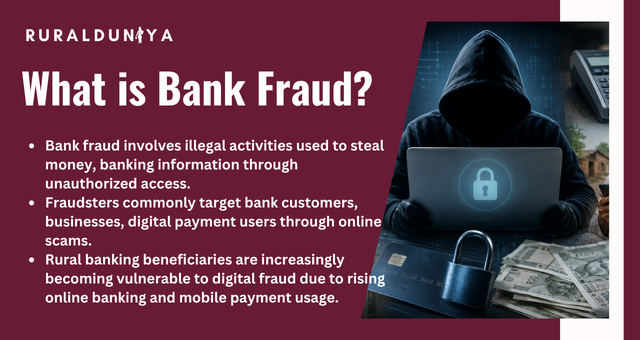
Bank fraud refers to illegal activities carried out to steal money, financial information or banking assets through deception, manipulation or unauthorized access.
Fraudsters may target:
- Individual bank customers
- Businesses
- Banks and financial institutions
- Digital payment users
- Rural banking beneficiaries
Bank Fraud in India
India has seen a major increase in banking fraud cases due to rapid digitalization and online banking expansion.
Some common reasons include:
- Increase in mobile banking
- Digital payment growth
- Weak cybersecurity awareness
- Fake loan applications
- OTP scams
- Identity theft
- Social engineering fraud
According to RBI reports, cyber-enabled banking fraud cases have increased significantly in recent years, especially involving online payments and digital transactions.
Rural India is also increasingly vulnerable because many first-time digital users may not fully understand online fraud risks.
Types of Bank Fraud
There are multiple forms of fraud affecting customers and institutions.
1. Online Banking Fraud
Fraudsters use fake links, phishing websites and malicious apps to steal:
- Bank passwords
- OTPs
- Debit card details
- Internet banking credentials
2. UPI and Mobile Payment Fraud
Scammers often:
- Send fake payment requests
- Use QR code scams
- Impersonate customer care agents
- Offer fake cashback rewards
3. Loan Fraud
Loan fraud includes:
- Fake loan approvals
- Forged documents
- Identity misuse
- Fraudulent borrowers
Banks and NBFCs face large losses through such cases.
4. ATM and Card Fraud
Criminals use:
- Card cloning devices
- Hidden cameras
- Skimming machines
to steal card details and withdraw money illegally.
5. Insider Banking Fraud
Sometimes fraud may involve:
- Bank employees
- Internal manipulation
- Fake account creation
- Unauthorized fund transfer
Bank Fraud Case in India
India has witnessed several high-profile fraud cases over the years involving:
- Fake guarantees
- Loan diversion
- Corporate fraud
- Digital payment fraud
- Cyber theft
However, smaller frauds affecting ordinary citizens are far more common today.
In rural India, many fraud victims include:
- Pension beneficiaries
- Farmers
- SHG women
- Jan Dhan account holders
- Elderly citizens
Fraudsters often target vulnerable users through fake calls pretending to be:
- Bank officers
- Government officials
- Insurance agents
- Customer support executives
Real-Life Rural India Example
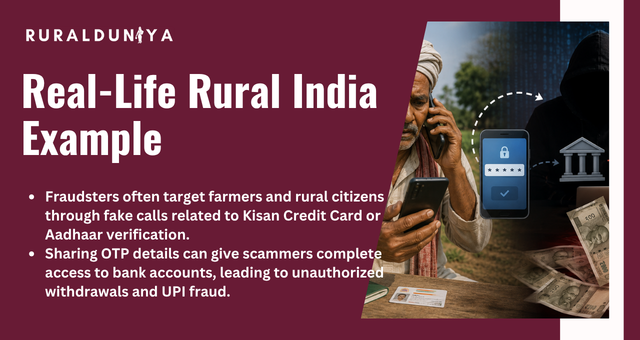
A farmer in Uttar Pradesh receives a phone call claiming that his Kisan Credit Card verification is pending. The caller asks for OTP verification to “update Aadhaar linkage”.
Within minutes:
- Money is withdrawn from the farmer’s account
- UPI access is compromised
- Multiple transactions occur
The farmer may not even realize immediately that sharing OTP gives fraudsters complete access to the account.
Such incidents are becoming increasingly common in rural and semi-urban India.
Bank Fraud Detection
Banks now use advanced technologies to detect suspicious transactions.
Common Fraud Detection Systems
- AI-based transaction monitoring
- OTP verification
- Behavioral analytics
- Device tracking
- Risk scoring systems
- Transaction alerts
Banks monitor:
- Unusual transaction patterns
- Sudden fund transfers
- Multiple login attempts
- Foreign access attempts
Bank Fraud Investigation
When fraud is reported, banks and law enforcement agencies begin investigation procedures.
Investigation May Include
- Transaction tracking
- Account analysis
- Device identification
- CCTV verification
- IP address tracing
- Digital forensic analysis
Major fraud cases may involve:
- Cyber Crime Cells
- RBI coordination
- Enforcement agencies
- Financial Intelligence Units
Bank Fraud Complaint Process
Victims should report fraud immediately.
How to File a Bank Fraud Complaint
- Contact the bank immediately
- Block cards and online access
- Register complaint with customer care
- File complaint on cybercrime portal
- Inform local police if needed
Important Helpline
- National Cyber Crime Helpline: 1930
Quick reporting increases the chance of recovering funds.
Bank Fraud Online Complaint
India now has online systems for fraud reporting.
Online Complaint Platforms
- National Cyber Crime Portal
- RBI Banking Ombudsman
- Official bank grievance systems
- Cyber police websites
Victims should keep:
- Transaction screenshots
- SMS alerts
- Complaint reference numbers
- Account details
- Call records
Bank Fraud Section Under Indian Law
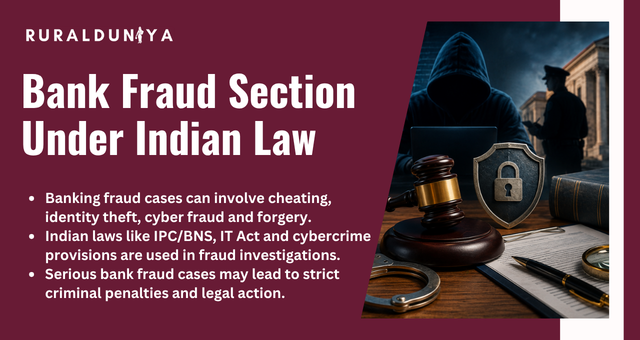
Several legal provisions apply to banking fraud cases.
Important Legal Sections
- Indian Penal Code (IPC) or Bharatiya Nyaya Sanhita (BNS)
- Information Technology Act
- Cybercrime provisions
- Banking regulations
- Fraud prevention laws
Depending on the fraud type, charges may include:
- Cheating
- Identity theft
- Criminal breach of trust
- Cyber fraud
- Forgery
Serious cases may attract strict criminal penalties.
Bank Fraud vs Wire Fraud
Many people search for “Bank Fraud vs Wire Fraud”.
Bank Fraud
Covers all forms of illegal banking-related financial deception.
Wire Fraud
Specifically involves electronic communication systems such as:
- Internet transfers
- Electronic wire transfers
- Digital communication networks
Wire fraud is more commonly discussed in international financial crime systems.
Why Rural India is Vulnerable to Bank Fraud
Rural India is increasingly becoming a major target for fraudsters due to:
- Rapid digital inclusion
- Low cyber awareness
- Smartphone expansion
- Increase in DBT transfers
- Growth in UPI usage
Common vulnerable groups include:
- Senior citizens
- Farmers
- Pension beneficiaries
- SHG members
- First-time internet users
Fraudsters often misuse trust and lack of digital awareness.
How to Prevent Bank Fraud
Important Safety Measures
- Never share OTP
- Avoid clicking suspicious links
- Verify customer care numbers
- Use official banking apps
- Enable transaction alerts
- Avoid unknown QR codes
- Regularly update passwords
Digital awareness is the strongest protection against fraud.
Government and Banking Measures
Banks and government agencies are improving:
- Cybersecurity systems
- AI-based fraud detection
- Awareness campaigns
- Digital literacy programmes
- Rural cyber awareness drives
RBI and cybercrime agencies are also strengthening fraud monitoring systems.
Impact of Bank Fraud on Citizens
Bank fraud creates:
- Financial losses
- Emotional stress
- Trust deficit
- Rural debt problems
- Digital fear among elderly users
For poor households, even small fraud amounts can seriously affect livelihoods and savings.
This is why cyber awareness and financial literacy are becoming critical parts of digital India initiatives.
FAQs
What is bank fraud?
It refers to illegal activities used to steal money or financial information through banking systems.
How can I file a bank fraud complaint?
You can report fraud through your bank, cybercrime portal or helpline 1930.
What is the difference between bank fraud and wire fraud?
It includes all banking-related frauds, while wire fraud mainly involves electronic fund transfer systems.
Why are rural citizens vulnerable to bank fraud?
Low digital awareness and rapid online banking adoption increase fraud risks in rural areas.

Nishank is a social impact enthusiast with a solid foundation in public policy, micro-enterprise, and agribusiness. Growing up in a farmer’s family has given him a profound connection to rural communities, fueling his passion to empower people towards self-reliance. He completed his undergraduate studies at the Delhi University and earned a master’s degree in Rural Management from National Institute of Rural Development & Panchayati Raj in Hyderabad.