Menstrual hygiene is not only a health issue but also an important social, educational and gender equality concern. Across India, especially in rural areas, millions of girls and women still face challenges related to sanitation, awareness and access to hygienic menstrual products.
In this article, Rural Duniya explains it’s definition, awareness programmes, 2026 theme, health education, week, risk factors, objectives, government schemes, legal developments and benefits of it’s management with a special focus on rural India.
What is Menstrual Hygiene?
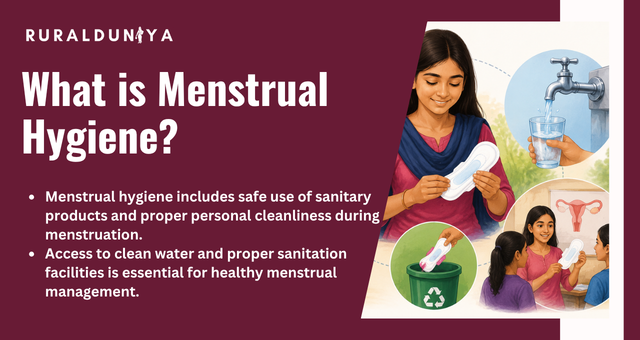
Menstrual hygiene refers to maintaining proper cleanliness, sanitation and health practices during menstruation.
It includes:
- Safe use of sanitary products
- Access to clean water
- Proper sanitation facilities
- Hygienic disposal methods
- Menstrual health awareness
Menstrual Hygiene Definition
The definition generally refers to the ability of women and girls to:
- Use clean menstrual products
- Access privacy during menstruation
- Wash safely with soap and water
- Dispose menstrual waste hygienically
- Manage periods with dignity and safety
The World Health Organization and UNICEF consider it is an important part of public health and gender equality.
Benefits of Proper Menstrual Hygiene
Good hygiene provides multiple benefits.
Health Benefits
- Reduced infection risk
- Better reproductive health
- Improved hygiene
Educational Benefits
- Higher school attendance
- Better confidence
- Reduced dropout rates
Social Benefits
- Increased dignity
- Better participation
- Reduced stigma
Economic Benefits
- Improved productivity
- Better workforce participation
- Reduced healthcare costs
Menstrual Hygiene Day
The Day is observed every year on May 28.
The day is celebrated globally to:
- Break menstrual stigma
- Promote awareness
- Improve health education
- Encourage policy action
- Support girls’ education
The date 28/5 symbolically represents:
- Average menstrual cycle of 28 days
- Average period duration of 5 days
Menstrual Hygiene Theme 2026
The official Day theme 2026 is expected to focus on:
- Menstrual dignity
- Inclusive health access
- Rural sanitation
- Adolescent awareness
- Sustainable menstrual products
Themes generally encourage governments, schools and communities to improve menstrual health systems and remove social taboos.
Importance of Menstrual Hygiene Awareness
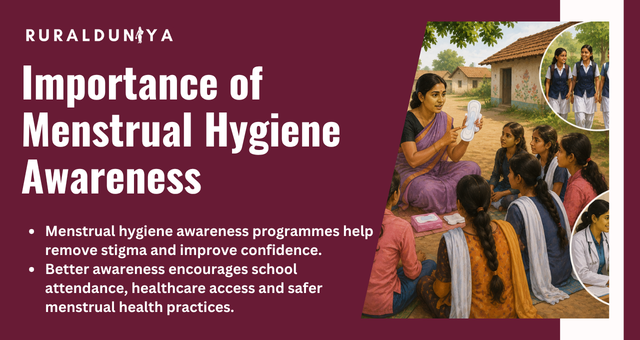
The awareness is essential because many girls still lack accurate information about menstruation.
Awareness programmes help:
- Remove myths and stigma
- Improve school attendance
- Prevent infections
- Promote confidence
- Encourage healthcare access
In many rural areas, girls still hesitate to discuss menstruation openly due to social barriers.
Menstrual Hygiene Education
The education plays a major role in adolescent health.
Educational Topics Include
- Menstrual cycle understanding
- Safe sanitary product use
- Hygiene practices
- Nutrition and health
- Emotional well-being
- Disposal methods
Schools, ASHA workers, Anganwadi centres and NGOs increasingly conduct menstrual health sessions in villages and schools.
Menstrual Hygiene Week
Activities may include:
- School awareness sessions
- Health camps
- Sanitary pad distribution
- Community discussions
- Rural outreach programmes
- Adolescent counselling
These campaigns aim to normalize conversations around menstruation.
Menstrual Hygiene for Girls
This is especially important for adolescent girls because poor menstrual management can affect:
- Health
- Education
- Confidence
- Mobility
- Social participation
In some rural regions, girls miss school during periods because of:
- Lack of toilets
- Poor sanitation
- Absence of sanitary products
- Social stigma
Rural India and Menstrual Hygiene
Rural India faces unique hygiene challenges.
Common Rural Challenges
- Limited awareness
- Poor sanitation facilities
- Water shortages
- Lack of privacy
- Financial constraints
- Social taboos
For example, a teenage girl in a rural village may use unsafe cloth materials because sanitary pads are expensive or unavailable nearby.
Without proper awareness and sanitation:
- Infection risks increase
- School attendance declines
- Emotional stress rises
This is why menstrual health is increasingly being linked with rural development, sanitation and women’s empowerment programmes.
Risk Factors of Poor Menstrual Hygiene
Poor hygiene can create several health risks.
Major Risk Factors
- Reproductive tract infections
- Skin irritation
- Urinary infections
- Poor reproductive health
- Emotional stress
- School dropout risks
Lack of awareness and improper product usage further increase health complications.
Objective of Menstrual Hygiene Programmes
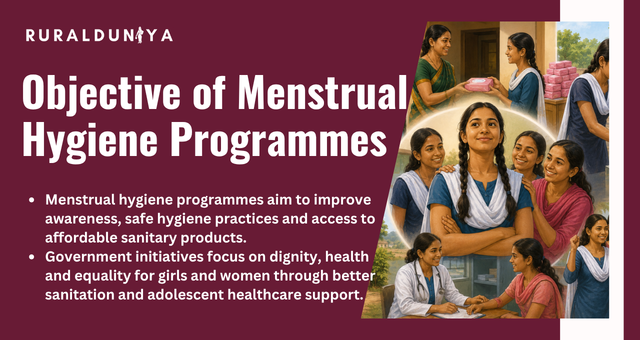
Government and health programmes aim to:
- Improve menstrual awareness
- Ensure affordable sanitary products
- Promote safe hygiene practices
- Improve sanitation infrastructure
- Support adolescent health
- Reduce stigma and discrimination
The broader objective is to ensure dignity, health and equality for girls and women.
Government Schemes for Menstrual Hygiene
India has introduced multiple hygiene initiatives.
Important Programmes Include
- Menstrual Hygiene Scheme under NHM
- Free sanitary pad distribution programmes
- School sanitation campaigns
- Rashtriya Kishor Swasthya Karyakram (RKSK)
- Adolescent health initiatives
Several states also run local sanitary pad and awareness programmes through schools and women’s groups.
Menstrual Hygiene Guidelines
Health authorities recommend:
- Changing sanitary products regularly
- Washing hands properly
- Using clean and safe products
- Maintaining personal hygiene
- Proper disposal of menstrual waste
Schools and institutions are also encouraged to ensure:
- Functional toilets
- Water availability
- Privacy for girls
- Safe disposal systems
Menstrual Hygiene Judgement and Legal Discussions
Courts and policymakers increasingly recognize hygiene as part of:
- Right to health
- Right to dignity
- Right to education
- Gender equality
Legal discussions have focused on:
- Free sanitary products
- School sanitation access
- Workplace menstrual support
- Public health responsibilities
Menstrual health is now increasingly viewed as a governance and human rights issue.
Challenges That Still Exist
Despite progress, several challenges remain:
- Social stigma
- Product affordability
- Rural sanitation gaps
- Poor waste management
- Low awareness
- School infrastructure limitations
Digital awareness campaigns and community-level interventions are becoming increasingly important.
Why Menstrual Hygiene Matters
Menstrual hygiene is not only about periods. It is connected to:
- Public health
- Gender equality
- Education
- Rural development
- Women’s dignity
- Social inclusion
As India moves toward inclusive development goals, hygiene management will remain an important part of health and social policy.
Improving awareness, sanitation and access can significantly improve the lives of millions of girls and women across rural and urban India.
FAQs
What is menstrual hygiene?
It refers to safe and clean health practices followed during menstruation.
When is Menstrual Hygiene Day observed?
It is observed every year on May 28.
Why is menstrual hygiene important for girls?
It helps improve health, school attendance, confidence and overall well-being.
What are the major challenges in rural menstrual hygiene?
Poor sanitation, low awareness, stigma and lack of affordable sanitary products are major challenges.

Nishank is a social impact enthusiast with a solid foundation in public policy, micro-enterprise, and agribusiness. Growing up in a farmer’s family has given him a profound connection to rural communities, fueling his passion to empower people towards self-reliance. He completed his undergraduate studies at the Delhi University and earned a master’s degree in Rural Management from National Institute of Rural Development & Panchayati Raj in Hyderabad.