FSSAI has become one of the most important public health priorities in India. Whether it is packaged food, street food, dairy products or rural food businesses, food quality and safety standards are now closely monitored through the Food Safety and Standards Authority of India.
In this article, Rural Duniya explains it’s full form, registration process, license types, FOSCOS portal, certificate download, recruitment, internships, state license fees and the growing importance of food safety in rural India.
What is FSSAI?
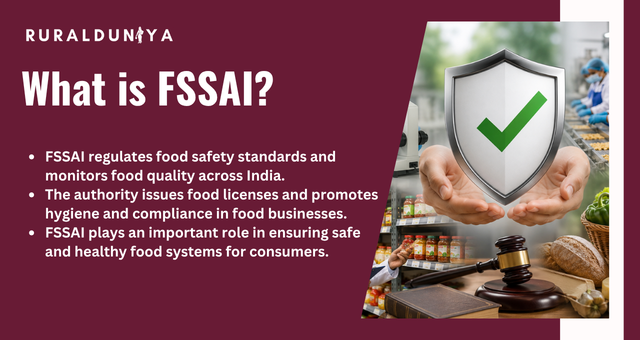
FSSAI stands for: Food Safety and Standards Authority of India It is the apex food regulatory body established under the Food Safety and Standards Act, 2006. It works under the Ministry of Health and Family Welfare and is responsible for:
- Regulating food safety standards
- Issuing food licenses
- Monitoring food quality
- Ensuring public health safety
- Promoting hygiene and compliance
The organization plays a major role in maintaining safe food systems across India.
Why FSSAI is Important?
It helps ensure that food products sold in India are:
- Safe for consumption
- Hygienically prepared
- Properly labeled
- Quality tested
- Regulated under national standards
Why FSSAI Matters?
It is not only a food regulator. It is becoming a key institution in:
- Public health protection
- Food quality assurance
- Consumer safety
- Rural enterprise formalization
- Export competitiveness
As India’s food economy expands, food safety systems will play an even bigger role in protecting consumers and supporting responsible businesses.
Challenges in Food Safety Compliance
Despite improvements, several challenges remain:
- Low awareness in rural areas
- Digital literacy gaps
- Small business compliance costs
- Documentation complexity
- Infrastructure limitations
Many small vendors still struggle with:
- Online registration
- Understanding regulations
- License renewals
Awareness and training are becoming critical for improving compliance.
What is GMP in FSSAI?
GMP stands for: Good Manufacturing Practices
GMP guidelines help ensure:
- Hygienic food production
- Safe processing conditions
- Quality management
- Clean infrastructure
- Standardized operations
Types of FSSAI Licenses
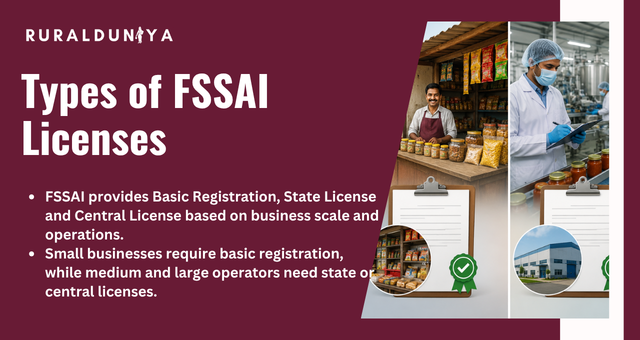
Larger food businesses require an license instead of basic registration.
1. Basic Registration
For small food businesses with lower turnover.
2. State License
For medium-scale food businesses operating within a state.
3. Central License
For large food businesses, exporters and interstate operators.
The type of license depends on:
- Business size
- Turnover
- Nature of food operations
- Production capacity
FSSAI State License Fees
Fees depend on:
- Business category
- Production capacity
- Food type
- License duration
Generally, state license fees may range from:
- ₹2,000 to ₹5,000 annually
Additional charges may apply for:
- Renewals
- Modifications
- Duplicate certificates
FSSAI Certificate
After approval, businesses receive an certificate.
The certificate includes:
- License number
- Business details
- Validity period
- Food category
Businesses must display the certificate prominently at business locations. The license numbers are also printed on food product packaging.
FSSAI Tracking System
Applicants can track:
- Registration status
- License approval
- Inspection progress
- Renewal applications
- Certificate updates
FSSAI Recruitment
The recruitment attracts candidates from:
- Food technology
- Agriculture
- Biotechnology
- Public health
- Law
- Administration
Recruitment positions may include:
- Technical officers
- Food analysts
- Administrative officers
- Assistants
- IT professionals
The jobs are considered important public sector opportunities in India’s food governance ecosystem.
FSSAI Exam
Candidates appearing for the recruitment often prepare for:
- Food safety standards
- Current affairs
- Reasoning
- Quantitative aptitude
- Technical subjects
The exam process may include:
- Written examination
- Computer-based tests
- Interviews
- Skill assessments
Food science and regulatory knowledge are important preparation areas.
FSSAI Apply Online Process
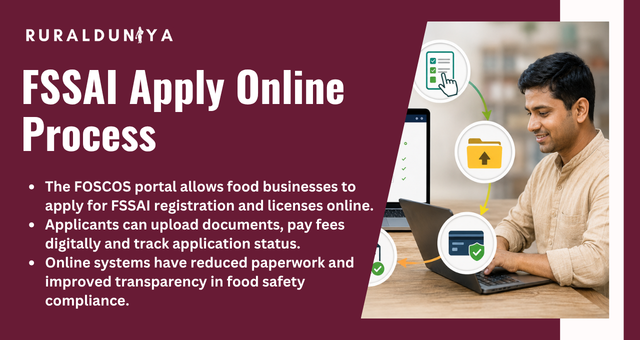
The online application process has simplified food business compliance systems.
- Visit FOSCOS portal
- Create login account
- Select registration or license category
- Upload required documents
- Pay fees online
- Submit application
- Track application status
Digital systems have reduced paperwork and improved transparency.
FSSAI Login
The system allows users to access online food safety services through official portals.
Using the login system, users can:
- Apply for licenses
- Track application status
- Download certificates
- Renew licenses
- Access inspection reports
- Manage registrations
Businesses and food operators must maintain active accounts for compliance-related activities.
FOSCOS Portal
One of the most important systems under FSSAI is FOSCOS. FOSCOS Full Form is Food Safety Compliance System.
FOSCOS is the official digital platform used for:
- Registration
- Licensing
- Renewals
- Tracking applications
- Compliance management
The platform was introduced to improve transparency and simplify food safety regulation processes.
FOSCOS has replaced older licensing systems with a more integrated digital framework.
Who Needs FSSAI Registration?
The registration is mandatory for many food businesses operating in India.
- Small food vendors
- Dairy operators
- Street food sellers
- Home kitchens
- Small rural food businesses
- Retail food shops
- Food transporters
Registration helps businesses operate legally under food safety regulations.
FSSAI Internship
The internships are popular among students in:
- Food technology
- Nutrition
- Public health
- Agriculture
- Biotechnology
- Rural development
Internships provide exposure to:
- Food regulation systems
- Policy research
- Food testing processes
- Public health frameworks
Rural India and FSSAI
FSSAI is becoming increasingly important in rural India because many rural businesses are entering organized food markets.
Examples Include
- Dairy cooperatives
- SHG food products
- Pickle and papad units
- Rural food startups
- Organic farming groups
- Millet-based enterprises
For example, a women’s Self Help Group in Uttar Pradesh producing packaged pickles may require:
- FSSAI registration
- Food labeling compliance
- Hygiene standards
- Packaging approval
Without certification, products may face difficulties entering formal retail markets.
FAQs
What is the full form of FSSAI?
It stands for Food Safety and Standards Authority of India.
What is FOSCOS?
FOSCOS is the Food Safety Compliance System used for online registration and licensing.
Is FSSAI registration mandatory?
Yes, many food businesses in India require registration or license.
What is GMP in FSSAI?
GMP means Good Manufacturing Practices for safe and hygienic food production.

Nishank is a social impact enthusiast with a solid foundation in public policy, micro-enterprise, and agribusiness. Growing up in a farmer’s family has given him a profound connection to rural communities, fueling his passion to empower people towards self-reliance. He completed his undergraduate studies at the Delhi University and earned a master’s degree in Rural Management from National Institute of Rural Development & Panchayati Raj in Hyderabad.