The HPV vaccine has become one of the most important preventive healthcare interventions worldwide. It helps protect against Human Papillomavirus (HPV), a common virus responsible for several cancers, including cervical cancer, which remains one of the leading causes of cancer deaths among women in India.
In this article, Rural Duniya explains the HPV vaccine, its uses, age eligibility, doses, cost in India, side effects, vaccine types, online registration and its importance for both urban and rural populations.
What is HPV Vaccine?
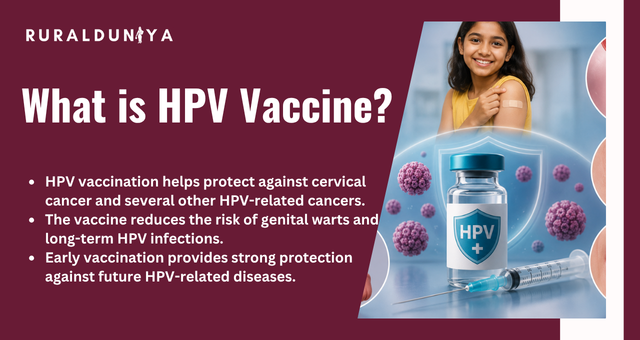
The HPV Vaccine is a preventive vaccine designed to protect against Human Papillomavirus (HPV) infections.
HPV is linked to:
- Cervical cancer
- Anal cancer
- Penile cancer
- Vaginal cancer
- Vulvar cancer
- Oropharyngeal cancers
- Genital warts
Vaccination significantly reduces the risk of HPV-related diseases and cancers.
What is HPV?
Human Papillomavirus (HPV) is one of the most common viral infections affecting both males and females.
The virus spreads primarily through:
- Skin-to-skin contact
- Sexual contact
- Intimate physical contact
Most HPV infections clear naturally, but some high-risk strains may lead to cancer over time.
Benefits of HPV Vaccination
Health Benefits
- Cancer prevention
- Reduced infection risk
- Better reproductive health
Social Benefits
- Improved awareness
- Healthier communities
- Reduced disease burden
Economic Benefits
- Lower treatment costs
- Reduced healthcare expenditure
- Improved productivity
HPV Vaccine Uses
The primary purpose of HPV vaccination is cancer prevention.
It Uses Include:
- Prevention of cervical cancer
- Prevention of genital warts
- Protection against HPV infection
- Reduction of HPV-related cancers
- Long-term reproductive health protection
The vaccine works best when administered before HPV exposure.
HPV Vaccine Types
Several vaccines have been developed globally.
Common Types of Vaccines
Bivalent Vaccine
Protects against two high-risk HPV strains.
Quadrivalent Vaccine
Protects against four HPV strains.
Nonavalent Vaccine
Protects against nine HPV strains and provides broader protection.
India has also developed indigenous vaccines to improve affordability and accessibility.
HPV Vaccine in India
The vaccine is increasingly being promoted in India through:
- Public health programmes
- State government initiatives
- Private hospitals
- Schools
- Cancer prevention campaigns
Several states have begun introducing HPV vaccination drives for adolescent girls.
The Government of India is also evaluating wider integration of HPV vaccination into public health systems.
HPV Vaccine Cost in India
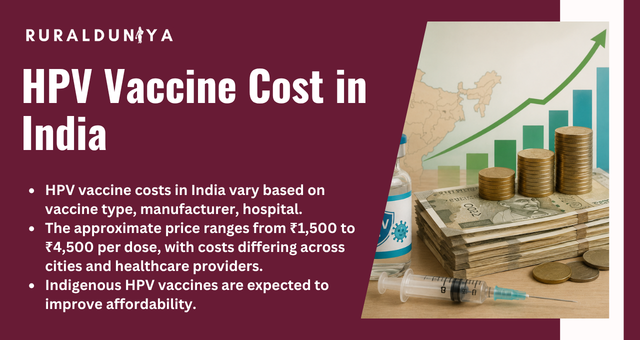
One of the most searched topics is vaccine cost in India.
The cost varies depending on:
- Vaccine type
- Manufacturer
- Hospital
- City
- Number of doses
Approximate Cost Range
- ₹1,500 to ₹4,500 per dose
Private hospital pricing may vary. With the introduction of indigenous vaccines, costs are expected to become more affordable over time.
HPV Vaccine Age Eligibility
The vaccine is most effective when administered before exposure to HPV infection.
Recommended Age Group
- 9 to 14 years
This age group generally develops the strongest immune response.
Extended Eligibility
- Adolescents
- Young adults
- Adults up to certain age groups based on medical advice
Healthcare professionals may recommend vaccination even after adolescence.
HPV Vaccine for Girls
HPV vaccination was initially promoted primarily for girls because it helps prevent cervical cancer.
Benefits for Girls
- Cervical cancer prevention
- Reduced HPV infection risk
- Better reproductive health
- Long-term cancer protection
The vaccine is considered one of the most effective cervical cancer prevention tools available today.
HPV Vaccine for Boys
Many people ask whether boys should receive the vaccine.
The answer is yes.
Benefits for Boys
- Protection against HPV infection
- Prevention of genital warts
- Reduced cancer risk
- Reduced virus transmission
Vaccinating boys also contributes to broader community protection.
HPV Vaccine Schedule
The vaccine schedule depends on age at vaccination.
For Ages 9–14 Years
Typically:
- 2 doses
For Older Individuals
Typically:
- 3 doses
Healthcare providers determine the exact schedule according to medical guidelines and vaccine type.
HPV Vaccine Doses
The number of vaccine doses depends on:
- Age
- Health condition
- Vaccination timing
Common Dose Schedule
- Two-dose schedule for younger adolescents
- Three-dose schedule for older adolescents and adults
Completing the full dose schedule provides maximum protection.
HPV Vaccine Side Effects
Like most vaccines, vaccines may cause mild side effects.
Common Side Effects
- Injection site pain
- Mild fever
- Headache
- Fatigue
- Dizziness
- Muscle pain
Most side effects are temporary and resolve within a short period.
Serious adverse reactions are extremely rare.
HPV Vaccine Registration
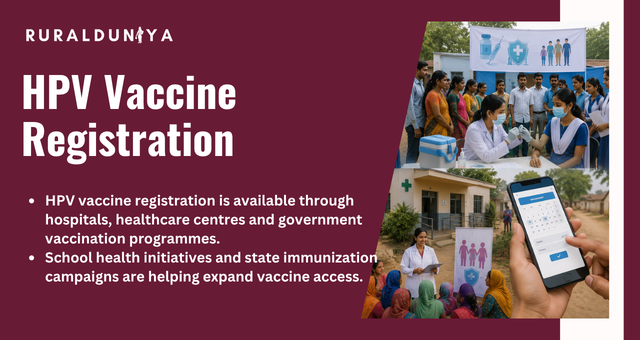
As awareness grows, many people search for vaccine registration options.
Registration may be available through:
- Hospitals
- Government vaccination drives
- School health programmes
- Healthcare centres
- State immunization campaigns
Some healthcare providers also offer appointment booking through online systems.
HPV Vaccine Online Booking
In many cities, vaccination appointments can be scheduled online through:
- Hospital portals
- Health apps
- Private healthcare platforms
- Vaccination centres
Online booking systems simplify access and scheduling.
HPV Vaccine and Rural India
HPV vaccination has major significance for rural India.
Rural Challenges Include:
- Low awareness
- Limited screening services
- Healthcare access gaps
- Social stigma
- Delayed diagnosis
For example, a teenage girl in a rural village may have limited knowledge about cervical cancer prevention.
Without awareness programmes:
- Vaccination rates remain low
- Screening participation decreases
- Cancer detection occurs late
Expanding HPV awareness in rural communities can save thousands of lives through early prevention.
Government Initiatives and Awareness Campaigns
Several organizations are promoting:
- Cervical cancer awareness
- Adolescent health education
- School vaccination programmes
- Community outreach campaigns
Healthcare workers, ASHA workers and school systems increasingly play an important role in spreading awareness.
HPV Vaccine and Cervical Cancer Prevention
Cervical cancer remains one of the leading cancers among women in India.
The vaccine offers:
- Primary prevention
- Long-term protection
- Reduced healthcare burden
- Improved women’s health outcomes
Experts consider HPV vaccination one of the most cost-effective cancer prevention strategies available.
HPV Vaccine in Zimbabwe
Zimbabwe has implemented large-scale HPV vaccination programmes through schools and public health campaigns.
The country is often cited as an example of successful vaccine rollout in developing regions through strong government and international partnerships.
Why HPV Vaccine Matters
The HPV vaccine represents one of the most important public health tools for cancer prevention.
For India, especially rural India, expanding vaccination coverage can:
- Reduce cervical cancer cases
- Improve adolescent health
- Strengthen preventive healthcare
- Save thousands of lives
With increasing awareness, improved affordability and government support, HPV vaccination is expected to play a major role in India’s future public health strategy.
FAQs
What is the ideal age for HPV vaccination?
The recommended age is generally 9 to 14 years.
Can boys take the HPV vaccine?
Yes. HPV vaccination is recommended for both boys and girls.
What is the cost of HPV vaccine in India?
The cost generally ranges from ₹1,500 to ₹4,500 per dose depending on the vaccine and provider.
Are HPV vaccine side effects serious?
Most side effects are mild and temporary, such as pain at the injection site, fever or fatigue.

Nishank is a social impact enthusiast with a solid foundation in public policy, micro-enterprise, and agribusiness. Growing up in a farmer’s family has given him a profound connection to rural communities, fueling his passion to empower people towards self-reliance. He completed his undergraduate studies at the Delhi University and earned a master’s degree in Rural Management from National Institute of Rural Development & Panchayati Raj in Hyderabad.